
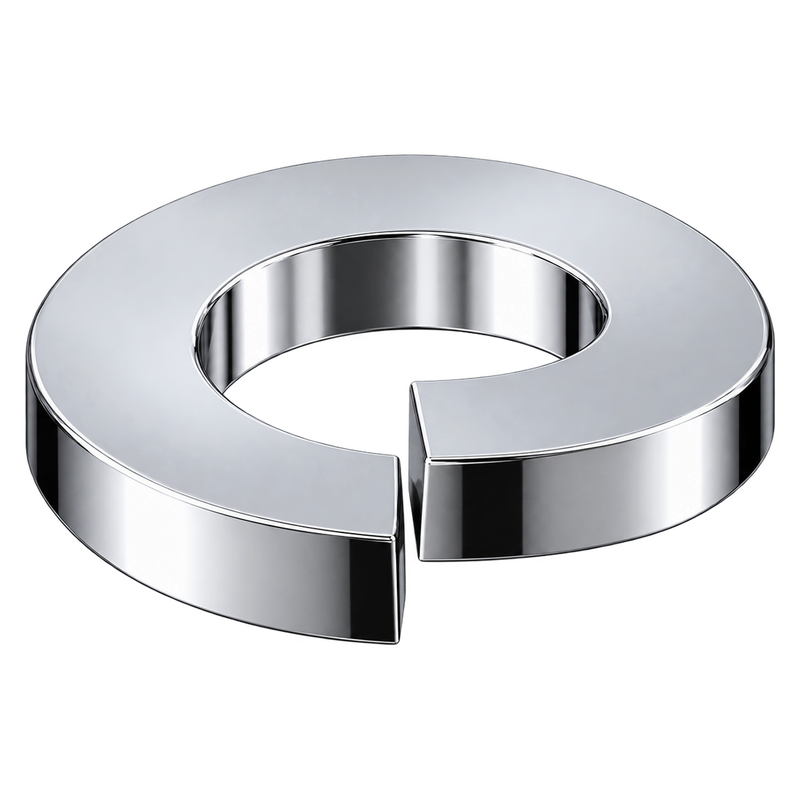
Patriot Bolt supplies washers in carbon, alloy, stainless and nickel grades, to standard dimensions or to your drawing, with mill test reports on every order. Our lock washers include split (helical spring) lock washers in regular, heavy and extra-duty series, and internal, external and combination tooth lock washers.
Lock washers are supplied to ASME B18.21.1 dimensions or to your drawing, and can ship with the bolts, studs and nuts on the same order.
Lock Washers at a Glance
- Types
- Split (helical spring) and tooth lock washers
- Split series
- Regular, heavy and extra duty
- Tooth styles
- Internal, external and combination
- Standard
- ASME B18.21.1, or your drawing
- Materials
- Carbon, alloy, stainless and nickel grades
- Finish
- Plain, zinc electroplated or zinc-nickel, or as specified
- Paperwork
- Mill test reports on every order
Lock Washer Types
- Split lock washers: a single-coil helical spring with a cut through the ring. The ends bear on the nut and the joint surface. Sizes are in our regular, heavy and extra-duty charts.
- External tooth lock washers: teeth on the outside edge bite into the nut and the surface for the most grip.
- Internal tooth lock washers: teeth on the inside edge, hidden under the fastener head, for a neater look on small screws.
- Combination styles: tooth washers combined with a flat washer or other features, to your drawing.
Choosing a Lock Washer
Lock washers are common on general equipment, machinery and electrical connections. On high-preload joints such as pressure flanges, correct bolt load is the main protection against loosening, and through-hardened flat washers are the usual choice when washers are used.
If you are looking at other ways to keep a nut in place, see Double Nutting and Jam Nuts and our flat washers.
Materials and Finishes
We supply lock washers in carbon, alloy, stainless and nickel grades. Stainless and nickel lock washers suit corrosive and high-temperature service; carbon steel is usually plated. Compare alloys in our Fastener Materials Matrix.
What to Send Us
To quote lock washers, tell us:
- Type (split or tooth) and series or style.
- Bolt size, or the dimensions or drawing for special washers.
- Material and grade.
- Finish.
- Quantity and packing or labeling needs.
Lock Washers FAQ
What does a lock washer do?
A lock washer adds spring tension or grip under a nut or bolt head to help resist loosening from vibration and movement.
What is the difference between regular, heavy and extra-duty split lock washers?
They fit the same bolt size, but heavy and extra-duty washers have a larger section and give more spring force. ASME B18.21.1 covers the dimensions.
Which tooth lock washer should I use?
External tooth washers give the most grip. Internal tooth washers hide under the head and suit small screws. Combination styles can be supplied to your drawing.
Should I use lock washers on flanged joints?
On high-preload pressure flanges, correct bolt load is the main protection against loosening, and through-hardened flat washers are normally used when washers are needed.
What materials are available?
Carbon, alloy, stainless and nickel grades, with mill test reports on every order.
Request a Quote
Send us the size, standard or drawing, with material, finish and quantity. Our team will confirm the details and lead time. Call (281) 581-0176 or request a quote.
Related: Washers · Flat washers · Spring washers · Nuts · Fastener Materials Matrix