
[ Stud Bolts ]
Collar Studs for Heat Exchangers
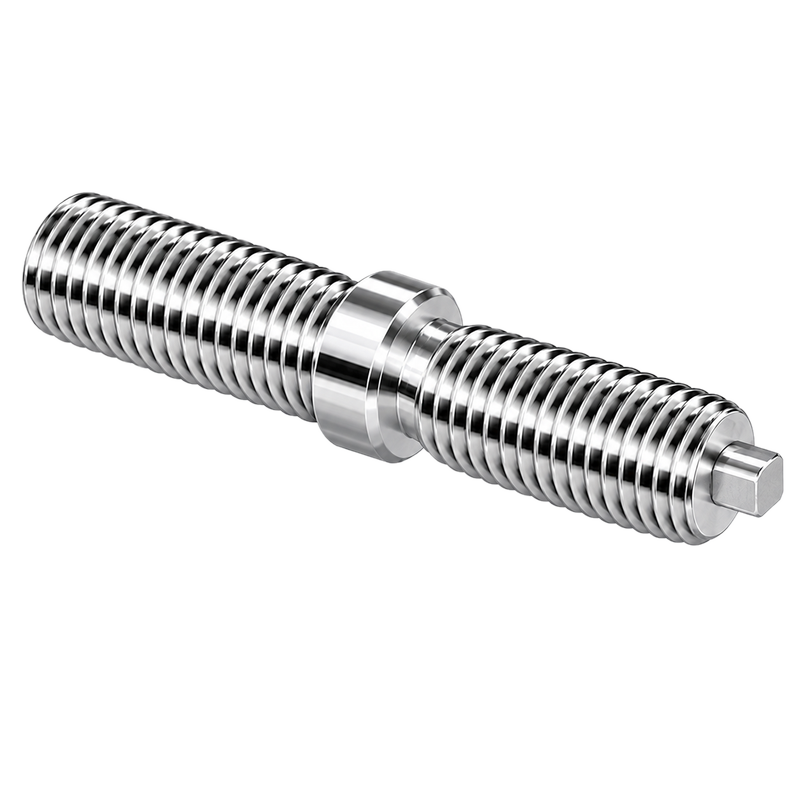
Patriot Bolt makes collar studs for shell-and-tube heat exchangers: studs with a collar that holds the tubesheet and shell-side gasket in place when the channel or bonnet is removed.
We make both styles in Humble, Texas: integral collar studs machined from one piece of bar, and nut-type studs with a collar threaded to the center. Tell us the size, length, collar and material, and every order ships with mill test reports traceable to the heat.
[ Quick Specs ]
Collar Studs at a Glance
- Type
- Stud bolt with a collar that seats in a counterbore in the tubesheet
- Styles
- Type I integral (solid) and Type II nut type, as shown in TEMA RCB-11.8, or to your drawing
- Collar
- Round or hex, with the size, thickness and location you specify. Square or flats on the end if needed
- Documents
- Mill test reports traceable to the heat
What Collar Studs Do
On a shell-and-tube heat exchanger with a removable tube bundle, the stationary tubesheet is clamped between the shell flange and the channel or bonnet flange. Ordinary studs pass through all three, so taking off the channel for tube inspection or cleaning also loosens the shell-side joint.
A collar stud has a collar part way along its length. The collar sits in a counterbore in the tubesheet and holds the tubesheet and shell-side gasket against the shell flange. When the channel nuts come off, the collar studs keep the shell-side joint together, so the channel or bonnet can be removed without disturbing the shell-side gasket or pulling the bundle to replace it.
Collar studs only hold the gasket in place while the channel is off. They do not replace the full set of bolting, and every stud and nut is installed and tightened before the exchanger goes back into service.
TEMA RCB-11.8 and API 660
TEMA RCB-11.8 covers collar studs for removable bundles. When the purchaser specifies them:
- Every fourth stud in the bolt circle is a collar stud, with a minimum of four.
- Collar studs are Type I (solid) or Type II (nut type).
- The tubesheet holes are counterbored to accept the collars.
- Collar studs are not sufficient for a shell-side pressure test. All pressure bolting is installed and tightened before pressurizing.
As an alternative, TEMA allows those tubesheet holes to be drilled and tapped, with the studs double-nutted or given machined flats.
API 660 calls for collar studs or tapped holes on at least 25% of the bolts, with a minimum of four, and for their locations to be shown on the drawings and marked on the tubesheet. Some owner specifications go further and require one-piece integral collar studs. Check your exchanger data sheet and specification for the style and number required.
Type I vs Type II Collar Studs
Both types do the same job. The difference is how the collar is made and held in place.
| Type I: Integral (solid) | Type II: Nut type (threaded collar) | |
|---|---|---|
| Construction | Collar and stud machined from one piece of bar | Separate collar threaded onto a continuous-thread stud |
| Collar location | Fixed when machined | Run to position, then locked |
| Locking | None needed | Set screw (TEMA shows 1/4 in.), or tack weld where your specification allows |
| Ends | Square or flats on one end to hold the stud | Flat or square as specified |
| Collar shape | Round, or as specified | Hex or round, as specified |
Integral collar studs are turned from bar large enough for the collar, with the threads cut or rolled on each side. There are no loose parts, and the collar cannot move.
Nut-type collar studs use a separate collar tapped to the stud thread. The collar is run to its location and locked so it cannot turn. This style lets the collar position be set to suit the joint.
Materials
Collar studs are usually made in the same grade as the rest of the exchanger bolting. Common grades include A193 B7, B7M for sour service, B16 for higher temperatures, A320 L7 for low temperatures, B5, and nickel alloys such as Inconel 625 and Inconel 718.
For nut-type studs, the collar is made from the same material as the stud unless your specification says otherwise. Tell us the grade, coating and marking your specification calls for. Compare grades in our Fastener Materials Matrix.
Ordering Details
To quote collar studs, tell us:
- Thread size and series, for example 1-8UN-2A, and overall length.
- Collar type: integral (Type I) or threaded to the center (Type II).
- Collar size: round diameter or hex across flats, thickness, and location from the end (or centered).
- Ends: square, flats or plain.
- Locking for threaded collars: set screw size, tack weld or none.
- Material, coating, marking and quantity, plus any matching heavy hex nuts.
If you have a drawing, upload it and we will make the studs to it. You can also build one in our fastener drawing generator by choosing the collar stud type, then download the PDF or send it straight to our team.
Collar Studs FAQ
What is a collar stud in a heat exchanger?
A collar stud is a stud bolt with a collar part way along its length. On a shell-and-tube heat exchanger with a removable bundle, the collar sits in a counterbore in the tubesheet and holds the tubesheet and shell-side gasket against the shell flange. The channel or bonnet can then be removed without loosening the shell-side joint.
How many collar studs does a heat exchanger need?
When the purchaser specifies collar studs, TEMA RCB-11.8 calls for every fourth stud in the bolt circle to be a collar stud, with a minimum of four. API 660 calls for collar studs or tapped holes on at least 25% of the bolts, also with a minimum of four. Your exchanger drawing or owner specification may set a different number.
What is the difference between Type I and Type II collar studs?
TEMA shows two types. A Type I (solid) collar stud has the collar machined as one piece with the stud, usually with a square or flats on one end. A Type II (nut type) collar stud uses a separate collar threaded onto the stud and locked in place, shown in TEMA with a 1/4 in. set screw. Some owner specifications require the one-piece integral style.
Can I pressure test the shell side with only the collar studs installed?
No. TEMA states that collar studs only keep the gasket in place and sealed while the channel is removed. They are not enough for a shell-side pressure test. Install and tighten all of the pressure bolting before pressurizing.
Do the tubesheet holes need to be changed for collar studs?
Yes. The tubesheet holes at the collar stud locations are counterbored to accept the collars. TEMA also allows an alternative where those tubesheet holes are drilled and tapped, and the studs are double-nutted or given machined flats.
Can I draw a collar stud before I order?
Yes. Our free fastener drawing generator has a collar stud type. Choose an integral collar or a collar threaded to the center, set the collar size, thickness and location, add a square or flats, and download the PDF or send it to us for a quote.
Request a Quote
Send us the thread size, length, collar details, material and quantity, or upload your drawing. Our team will confirm the details and lead time. Call (281) 581-0176 or request a quote.